Hard Hurts; Rigor Invigorates

Lately, there’s been a lot of chatter about the concept of rigor.  Books are being written about it. Principals are touting it and teachers are trying to figure out what it looks like with a 150 students.

Several years ago, a colleague accused me of not wanting as much rigor for my department as he wanted for his.  To this day, the comment still makes my stomach churn.  There isn’t a teacher alive who doesn’t want to think of his instruction as rigorous.  In fact, the term rigor has sometimes been worn as a badge of honor when teachers describe their classrooms.  Some teachers have even been known to use the word rigor as a way to weed out the lightweights who can’t handle their one size fits all instruction.

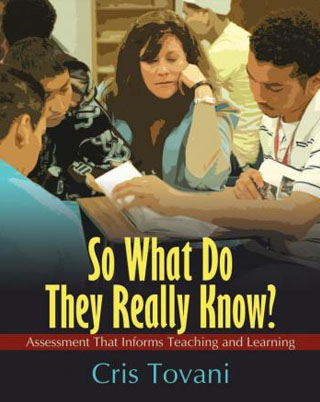
In my last book, So What Do They Really Know (146-147), I compare the terms rigorous and hard.  As I examined my own beliefs about how the two concepts differ, I discover there is a fine line between having a rigorous classroom and a hard one in terms of student success.  Here’s what I learned:

Rigor invites engagement.  Hard repels it.  When learners are engaged in something rigorous, they lose track of time.  When the activity is hard, time seems to drag on endlessly.  Learners who experience rigor, feel encouraged, self-confident, and have a sense of accomplishment.  Hard is often trademarked by discouragement, avoidance, and a feeling that the effort spent doing the activity is a waste of time.

Our beliefs about rigor affect how we approach instruction.  For me rigor isn’t tied to quantity or rate.  It isn’t about the number of novels I blast through or the number of pages I assign for homework, or even how fast I cover content.

Rigor varies and depends on the learner’s skills and motivation to complete the task.  It changes as the learner gains expertise. When it comes to rigor in the classroom, the bad news for teachers is that instead of having one high bar that all students are expected to reach, there needs to be several, adjustable bars that move as learners progress.  Most importantly, rigor invites engagement because learners experience success.  For me, if students aren’t engaged, I’m a very lonely teacher.

Consider how you invite students into challenging, interesting curriculum as you plan for first semester.

-Cris


Comprehension x 3 Conference • July, 2012 •Denver, CO

Comprehension x3 2012 registration is now open!

Registration is now open for Comprehension x 3. Please go to www.regonline.com/CX32012  to get all the details and to register.

Download Flyer!

Questions?

Please contact Melinda Ogle at CX3_2012@comcast.net

Workshop Materials

Cx3copy
Document label : Cx3copy.pdf (1 MB)
Cx3copy
Document label : Cx3copy1.pdf (1 MB)

How to Choose a Just Right Book

I was shopping in the delightful River Run bookstore in Portsmouth, NH and came across a book that the entire staff had read that I had never heard of. “You must read this book!” the hand written recommendation implored and lucky me, I hit the X on the treasure map:  The Giant’s House by Elizabeth McCracken. It is about a 30-something librarian that falls for the (teenage) town giant – a boy who grows, and grows, and grows, and grows. What kind of premise is that? Who writes a book about that?  The human mind amazes me again and again, and because of passages like this I sighed audibly as I read:

I want to tell you about his body.

His thighs –

I want to say that they were like railroad ties, and they were, they were solid and blocky and no wider at the hip than at the knee, but I promised myself I wouldn’t turn his body into something it wasn’t. I wouldn’t compare it to other things. People always did that. They made him into a redwood tree, a building, the Eiffel Tower. I’d never thought about it before, but now suddenly, with so many strangers around, so many new people making guesses, assessing his girth, arm span. I couldn’t help doing it myself. I vowed to stop.

I don’t want to leave you with a man assembled out of house-hold goods, a scarecrow with hands as big as toasters and arms long as brooms and glasses the size of a child’s bicycle, I want to detail only facts….

Finding great books is one of the incredible joys of my life.  I read reviews voraciously and mostly, when I read a review, I just KNOW I’ll love a book. But, why? What is it? I think it is a crazy cocktail of surprising characters, quirk factor, and beautiful language.  It would be fun to analyze the reviews of the books I am drawn to. What are the key words that make me stop, drop everything, and shop for a book?

Besides the local recommendation, what else struck me? A blurb on the back by Salon.com stated, “This book is so lovely that, when you’re reading, you’ll want to sleep with it under your pillow.” That made perfect sense to me. I understand that kind of longing for a book, to have it near me all the time, even when I don’t have time to read it. I still throw it in my purse, just in case I find myself with a spare minute — waiting to pick up or drop off kids. An extra long traffic light.  You never know. This description also moved me to buy, “Two misfits whose lonely paths cross at the circulation desk, Peggy and James are odd candidates for friendship, but nevertheless they soon find their lives entwined in ways that neither one could have predicted….as he grows…so does her heart and their most singular romance.”  A librarian and a teenager? This should have creeped me out, but instead, I agreed, “I MUST read this book.”

I usually have a print book, an e-book, and an audio book going all at the same time. The i-pad has changed the weight of my bag, since I can have hundreds of books with me without breaking my shoulder. I never want to be caught with a minute of down time without a book or magazine. It is a sickness, I know.  I heard an interview with Maurice Sendak once where he recounted loving books so much that he would take bites out of pages. He wanted to eat the books he loved. I love books that much too.

So, what does this have to do with school? I’m not sure, other than sharing and spreading personal joy should be our goal every day.  Choosing a just right book is a complicated matter.  Sharing things with kids that delight us, make our eyes light up, and our brains crackle, and our hearts grow bigger should be the learning target every day. Don’t dumb it down…make it into the miraculous event it is, every time. Every single time you find a book that moves you, it is a tiny miracle.

Take some time to spread a little joy to the kids and grown ups you work with today – share a great book, and how you happened to come across such a treasure.

-Sam

Thriving On A Block Schedule

Last week, I was working with a Middle School that is transitioning from a 7-Period Day to a Block Schedule.  Using longer blocks of time effectively and efficiently help both teachers and learners slow down, dig deep, take time to get to know each other and most importantly ….breathe. There are a few guiding principles that help teachers actively plan for longer chunks of time:

Teach how you learn.  If you learn best by doing, give students time to “do” as well.  If models help you see what you are supposed to do, provide models so students can see what you want.  If targeted and immediate feedback improves your learning, consider ways to do the same for students.

Teachers are experts not babysitters.  Instead of planning how you will occupy students during class, plan how you will have students apply, practice, and demonstrate what you have taught.  Ask yourself, “What will kids read, write, solve, discuss, or create today?”

Choice drives engagement.  Offer it whenever possible. Sometimes providing choice means providing two different articles to choose to read or two different math problems to choose to solve.  Sometimes choice comes in letting kids decide how they will demonstrate understanding.  Offering the option to annotate text or use an inner voice sheet may increase the number of students who turn in their work.

Practice make perfect.  According to John Hattie’s meta-analysis, practice with timely feedback closes the achievement gap faster than any other instructional strategy.  When designing lesson plans and how you will grade, consider how you can use student work time and the work you ask students to do to provide useful feedback.

Teaching is incredibly complex.  Teachers have one of the hardest jobs there are.  No one has completely mastered the calling.  So, collaborate with colleagues. Ask for help.  Share when you can.  Take care of each other.

Time is the enemy.  We have more to teach than time to teach it. When it comes to students knowing your curriculum, consider what will make them smarter, more successful adults down the road.  Ask yourself, “What about my content is worthy of my students knowing?”
When planning for student learning, remember to ask yourself, “What will the students DO tomorrow, and HOW will I share with them WHY they are doing it?”  Start there, and you will be amazed at how large blocks of time fly by as you and your students are immersed in the “flow” of thinking and getting smarter– you’ll never want to go back to the 48 minute period again.
Have a great weekend,
Cris

A First Day with Substance

Ed. Note: Today we have a guest blogger. Please welcome our dear colleague  Colleen O’Brien, an Instructional Coach from the Cherry Creek School District in Denver, CO. We think you’ll love her thinking. – Cris & Sam

A question all teachers ask at this time of year is, “How should I begin a school year worth coming back for every day?”

Let’s set the stage: Thirty sets of wide-eyes dart around the room studying the walls and watching the teacher’s every move. Necks crane to see the papers on the teacher’s desk and to see who is across the room. Unuttered questions are spreading in student brains like wildfire: “Will this class be interesting? Can I do the work? Who else is in the class? Will this teacher like me? Where will I sit? Will I be a star in this class?”

The quiet electricity in a classroom in the first ten minutes of the first day of class could power the florescent lights that are suspended from the ceiling.

What to do with this student energy?

Choice A: Pull out the syllabus, read what you wrote, explain classroom rules, assign seats, play a name game. Message to students: Teacher does all the talking. Teacher sets all the rules. Teacher does not need my participation. This class is just like all the others. This class will be boring. I have already done this before.

Or

Choice B. Ask students to read, write, and talk about a controversial and timely content- based question. Ask them to do the real work of scientists, artists, critics, citizens, and mathematicians including asking questions, formulating ideas, offering opinion, strategizing with classmates. Message sent to students: The world is interesting. My opinion counts. The teacher thinks I am smart. I have to read, write, and talk to learn. There is more than one answer. Asking questions is a good thing. My classmates need me to participate.

For the first time in twenty-one years and with bittersweet feelings, I am not preparing for the first days of class. Instead I am coaching fifteen first year teachers to get ready for their students on Monday. I asked teachers to read Chapter 4 of Intellectual Character (Ritchart, 2002) entitled “First Days, First Steps initiating a Culture of Thinking”.
Here are some of the big ideas we are discussing in our planning meetings this week…

1. Ponder big ideas: Pose big questions about your content on the first day of school and allow students time and resources to begin to answer them. Are you a Democrat? A Republican? A Tea Partier? Are Babies Racist (Newsweek, 1999)? Is DNA destiny? Do all stories need a beginning, middle, and end?

2. Celebrate student thinking: Ask students to write their thinking about the big ideas. Write back to students before the next class and give them positive feedback on their thinking. Hang student work on the wall before they come back to class the next day next to their pictures. Share highlights of student writing with the whole class.

3. Read a great piece of text: Current, controversial articles are everywhere. If I were teaching this year I would begin my class with an article from Entertainment Weekly about the movie The Help (August 12, 2011) that poses the question “Who should tell the story of the Civil Rights movement?”

4. Study your students: Intentionally plan your lessons so you have time to study your students. Watch them as they read, write, and talk. Before entering the classroom each morning, ask yourself, who am I going to learn about today? Pick a few students and snoop a little, learn about who they are as readers and thinkers. Find out who their friends are and what makes them proud. Find out what worries them and what makes them laugh. Find out about their families and ask them to tell you a story about their lives. Look into their eyes and at their noses. Knowing students deeply will help you choose engaging texts and help you to create learning situations that motivate them to know more. This yearlong study of students begins on the first day of school.

Are you still unsure if you will choose A or B on the first day of school?
One more thought. Think about the first staff meeting you sat in this school year. Did it give you energy to start a new year, or make you long for summer? Did your leadership team choose A or B?

Choice A: Message to staff: Principal does all the talking. Principal sets all the rules. Principal does not need my participation. This school year is just like all the others. This school year will be boring. I have already heard this before.

Choice B: Message to staff: School is interesting. My opinion matters. The principal thinks I am smart. I have to read, write, and talk to learn. There is more than one answer. Asking questions is a good thing. My staff needs me to participate.

Have a great first week with students! Thanks for all your hard work.

– Colleen O’Brien, New Teacher Mentor/Coach, Cherry Creek School District, Denver, CO

Radical Idea: Take Time to Plan

Figuring out what we will teach, as well as WHY we will teach it is the best way we can ensure that students will not only learn, but also jump out of bed each morning eager to get to school.  And, here’s a little secret – it is also the best way to get TEACHERS to jump out of bed eager to get to school.

When you know why you are doing what you are doing, it takes away the fear factor.  It allows your full focus to be on students – where it belongs.  They should be the surprise each day – the incredible ideas and thinking that comes out of their mouths and pencils.

If we want teachers to be ready for kids to arrive, most of the time before schools starts needs to be dedicated to PLANNING.  What will students know at the end of the first 3/6/9 weeks of school? What will they be able to do? What will they understand that will help them be better human beings and feel more powerful in the world?

When teachers slow down and take the time to long-term plan – in a minimum of 3-week chunks, students learn more, can do more, and be more, because we are teaching with intention, not by accident.

In your myriad of meetings and classroom set-up activities, give yourself the gift of time. Grab a colleague and start to discuss the big ideas behind what you will teach this year, then figure out what the students will create to demonstrate their understanding. Commentary for the local newspaper? A memoir excerpt they’ll share at an Open Mic Cafe Night in October? A “How to Save Energy” brochure to distribute to the neighborhood around the school?

As you are planning, all along the way, write learning targets that address knowledge, skill, and reasoning goals….backmap these goals to the standards you are required to teach, and then, take a really radical step:  challenge yourself by doing your own assignment!  This will help you revise and refine your thinking, add some skill targets, take others away.  When you experience first hand all that goes into creating a high-quality piece of work, you get more real about goals for your students and how much time it takes.    Get out a calendar and map it all out to make it real.

Spending 4-8 hours before school starts thinking through WHY you are teaching particular content and what you want students to walk away with will have huge payoffs, in terms of energy and happiness, oh, and LEARNING for you and your students.

Happy Planning this week (and the next, and the next, and the next… ),

-Sam

Quiet Space

I’m headed for my quiet space—literally.  Soon I’ll be landing at Orange County Airport and driving about an hour to the coast.  It is there that I will recharge my batteries for the coming year.  Stretched out on the, bumpy beach soaking in the warm California sun I’ll run my feet and fingers through the sugar fine sand.  I need to remember how this feels.  I will inhale deeply and smell the salt in the air as I marvel at the azul sky.  This I need to remember too.  I will listen to the muffled sound of the waves as they hit the shore barely noticing the cries of seagulls and squealing children.  I will take multiple mind pictures of the waves crashing onto the shore in the morning light, afternoon light and the setting sun light so that I can go to this space when times get stressful.

I learned about quiet spaces from reading Tales of a Hard Court Warrior.  Wildly successful NBA basketball coach, Phil Jackson shares in his memoir how he coached the Chicago Bulls after the return of Michael Jordan.  Many of the younger players on the team were little kids when Jordan had his first run.  As boys, they idolized him and when they found themselves on the same team practicing with the legend they had a hard time playing because they were so in awe of man.  Jackson knew that he needed to do something different or the team was only going to consist of one player.

Watching the Bulls during their successful reign generated curiosity about Jackson’s style of time out calling.  He seemed to always know when to call them and what to do to win the game. In Tales of a Hard Court Warrior, Jackson tells readers what he did during those three-minute breaks.   For the first 90 seconds of the timeout players went to their “quiet space.”  Some misinterpreted this as poor time management when in reality, players were calming their mind so they could find their zone.  The last half of the timeout was Jackson’s to share the game winning play.

Every coach knows that even the best play is worthless if players are unable to execute it.  When circumstances are stressful and stakes are high, people, even the most prepared ones, have a tendency to “choke.”  Players who can find their quiet space have a much better shot of finding their zone.

During the summer, I practice going to my quiet space.  When I am fortunate enough to literally go there, I do everything I can to remember what it feels, looks, smells, and sounds like so when the stakes are high and stress is about to overtake my calm, I can regroup and get into the zone.

Where’s your quiet space?  Write us back and tell us where you go when things get to be too much.

Happy Zoning,

Cris

What Makes a Writer a Writer?

I was standing in the queue behind Cris to get into the Rockies baseball game last night, and the man checking her bag at the gate said, “Oh, you must be a writer.”

Cris responded, “Yes, I am. How did you know?”

“All the pens and paper,” he replied.

As we walked in, Cris turned to me and said, “Any other day I would have said, ‘No, I’m a High School English Teacher’, but since my book is coming out tomorrow, I decided to say ‘YES!’”

Cris Tovani, on a “normal” day, doesn’t consider herself a writer? Crazy, I know but that is one reason why we need people: friends, colleagues, and our students, to give us a reality check every now and again.  Happily, I am here to be Cris’ reality check. Yes, she is a writer, and a fabulous one at that. A writer that has incredible voice, and passion, and a powerful vision for what adolescents need to become “better” human beings on a daily basis.

To hear this writer talk about the “why” behind her book, check out this video interview we recorded a few weeks ago: http://www.youtube.com/watch?v=c3ir43_qzPU.

Happy (almost) weekend! Cris is up to blog next Friday, so bookmark the page and check back in next week.

-Sam

So, What Do They Really Know?

Cris and I are so excited about her new book coming out on July 15th.  You can check out the full text on the Stenhouse website at http://www.stenhouse.com/emags/0730/index.html.

Renee Bernazzani, a Middle School Principal in Evergreen, Washington checked out the text online and wrote,

“I’ve read through the first chapter and as typical Cris it’s an easy read, you feel like you’re sitting around just chatting with her, yet the passion and intensity to the job permeates each word!  I’m anxious to get it in my hands.”

We are too, and we hope that you’ll write in and tell us what you think along the way. Stenhouse is running a Book Club/Study Group Contest where you can win a Skype visit with Cris. Stay tuned for more information! – Sam


Workshop Materials

CT_Hi
Document label : CT_Hi1.mov (9 MB)